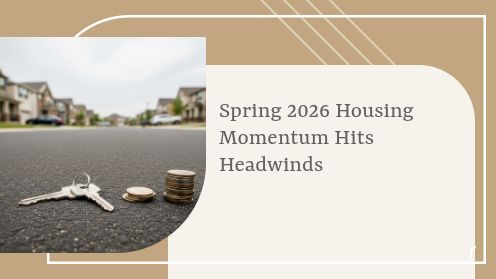
Spring 2026 housing showed early momentum with rising inventory and easing prices.
Mortgage rates rebounded above 6%, weakening buyer confidence and slowing demand.
Inventory rose 8.1% yearly, while median listing prices fell 2.2%.
Homes now take longer to sell, signaling a shift toward a more balanced market.
Economic uncertainty and affordability issues continue to limit a full housing recovery.
Blog
-
Spring 2026 Housing Momentum Hits Headwinds
-
Trends to Watch Out for During the 2026 Spring Homebuying Season
Homebuying conditions have improved with mortgage rates dropping below 6% earlier this year, increased inventory, and slowing home price growth, boosting affordability. However, recent geopolitical tensions have pushed rates back up to around 6.5%, raising concerns about inflation and economic slowdown. Inventory and price trends vary by region, with some areas seeing rising prices and others stabilizing or declining. Buyers are advised to be financially prepared and seek professional guidance.
Continue to full article -

How to get ready for closing when buying a home
Closing on a home transfers ownership from seller to buyer, involving signing documents, paying closing costs, and receiving keys. Key steps include organizing documents, reviewing loan and seller disclosures, checking the closing disclosure, and securing homeowners insurance. Prepare funds early for closing costs, lock in your mortgage rate, transfer funds securely, and do a final walk-through to confirm the property's condition before signing.
Continue to full article -
US Housing Signals Shape 2026
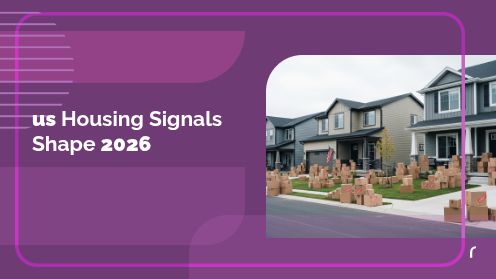
US median list price stood at $440K, while new listings came in at $430K. Inventory reached ~725K properties in the current quarterly snapshot.
Homes averaged 121 days on market, with a 63-day median. The market action index hit 38, signaling a slight seller's advantage.
Price per sq-ft fell to $290 from $298 in Early-Q2 2025, showing yearly softening in listing values despite the market's slight seller edge.
Price cuts were widespread: 34% of properties saw decreases.
Relisted homes made up 9% of properties, adding another sign of churn as sellers re-entered the market during the current period. -

Southern California Sellers Gain in Spring
Best timing depended on local conditions, personal goals, and whether the home was truly ready. The guidance was clear: if you are not ready, wait.
Historical regional trends pointed to Mid-Spring through Early-Summer as the prime selling window, with California listings in Mid-Spring, Late-Q2, and Early-Q3 performing best.
For Southern California, Mid-Q2 through Late-Q3 offered strongest pricing opportunities. Sellers prioritizing speed gained an edge by listing as early as Late-Q1.
In Riverside, Late-Q2 listings historically brought the biggest price premium, ~3% above the yearly avg. Mid-Spring listings sold fastest, about 6 days quicker.
Across Southern California, Mid-Spring was the fastest-selling period: homes averaged 37 days on market versus a regional yearly avg. of 44 days. -

How Urbanization Shapes Global Real Estate
Over 4 billion people now live in cities, projected to reach nearly 70% globally by 2050.
Urbanization drives strong housing demand, increasing property values and favoring metropolitan over rural markets.
Infrastructure investment, transit access, and mobility significantly enhance commercial and residential property ROI.
Modern planning focuses on livable, mixed-use neighborhoods, boosting appeal of well-designed urban developments.
Trends like green buildings, hybrid work, and smart technologies reshape global real estate markets.
-

Navigating 6% Mortgage Rates: Opportunities Ahead for 2026
The U.S. housing market faces a "Great Reset" with 30-year mortgage rates around 6% and slowed GDP growth, causing a cooling after the 2025 recovery. Builder sentiment remains pessimistic, with incentives and price cuts common. Wage growth now outpaces home price increases, improving affordability, but upfront costs remain a barrier. The market awaits economic stabilization and potential rate cuts for recovery.
Continue to full article -

What NOT To Do Before Closing on a House
First-time home buyers should avoid several common mistakes after mortgage pre-approval to ensure a smooth closing process. Key actions to avoid include changing jobs, purchasing a new car, making late payments, and opening new bank accounts. It's also crucial not to spend down payment funds, offer more than the appraised value for a home, close debt accounts, co-sign new loans, skip home inspections, or ignore lender requests. Maintaining financial stability and consistency is essential until the loan is finalized.
Continue to full article -

Sell, Hold or Renovate? Key Homeowner Decisions in 2026
The 2026 U.S. housing market is shifting to a cautious recovery with modest price gains, increased inventory, and more balanced buyer-seller conditions. Mortgage rates around 5-6% create a new normal, reducing speculative buying. Homeowners face choices: sell in a slower market, hold with low-rate mortgages, or renovate amid high construction costs. Regional trends and personal needs are key in deciding whether to sell, hold, or improve properties.
Continue to full article -
Fannie Mae: Mortgage Rates Will Drop To 5.7% By Year End
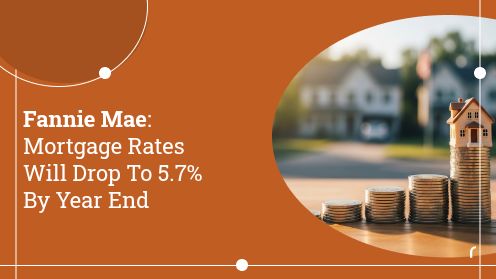
Fannie Mae forecasts 30-year mortgage rates falling to 5.7% by Q4 2026, down from ~6.0% in early 2026.
National Association of Realtors expects home sales to rise about 14% in 2026 as lower rates bring buyers back.
Single-family housing starts projected to drop 6.2% year-over-year through the first three quarters of 2026, limiting supply.
Construction expected to rebound 5.1% in 2027, but tight inventory in 2026 may keep competition elevated despite lower rates.